Rental Turnover Wall Repair: A Landlord's Guide
A rental turnover gives you a short window to bring walls back into shape before the next tenant arrives. Drywall work is one of the few parts of that window you can't hurry, since every coat of compound and every layer of texture needs to dry. In a foggy coastal town that drying runs slower than it would inland, so the plan has to leave room for it.
Typical move-out damage
Most turnovers reveal the same short list: anchor holes and picture hooks, a door-handle hole where nobody fitted a stop, scuffs and chips on outside corners from moving furniture, a television bracket torn out of the board, and tape lifting along a joint near the bathroom. Less often, a slow drip under a sink or around a shower that the departing tenant never reported.
Walk the unit in good light before booking anything. Run a flashlight beam flat along each wall; it picks out dents, nail pops and earlier repairs that ceiling lights hide. Photograph each with something beside it for scale, and note which rooms are textured and which are flat.
Patch, paint or both
Small holes and dents can be filled, spot-primed and the wall painted. A single touch-up over an aging paint job tends to show, particularly in eggshell or satin, so budget to paint the whole wall rather than one square. Larger holes need a backed insert, tape, texture and primer before paint.
When a wall carries more repairs than clean surface, a thin skim of compound over the entire face can cost less and look better than a dozen separate mends. Any mark on a ceiling needs a sealing primer under the new paint, otherwise it tends to bleed back through.
Check bathrooms and the walls below windows with a moisture meter, not just by eye. A soft spot behind a vanity is a leak to fix before the next tenant moves in, not something to paint over.
Scheduling between tenants
Arrange the work so drying overlaps with other tasks. Patching and texture come first, then paint, then flooring and cleaning. Allow the drywall stage at least a few days in a turnover plan; a small job may finish sooner, and pulling paint forward beats pushing a move-in back.
Night and morning fog is routine in Half Moon Bay, and most of the rain arrives between November and April. Winter turnovers dry slowest. Leave the heat on in an empty unit, keep a box fan plus a dehumidifier going, and open windows in the afternoon once outside air is drier.
October brings the Half Moon Bay Art and Pumpkin Festival and crowds of visitors to town. If you also host short stays, that is a weekend to keep free of half-finished walls.
Safety in older units
Rental units can sit in older buildings, and the historic downtown has buildings dating as far back as 1869. In an older building, ask whether the texture or joint compound needs an asbestos test before anyone sands or cuts it. Keep dust out of shared hallways with plastic across the door and dust extraction hooked to the sander, and air the unit out before the new tenant arrives.
Turnover paper trail
Keep dated photos of the damage, the finished repair and the price for each turnover. They make the next walk-through easier and show whether the same wall keeps taking hits, a sign it needs a door stop, a corner guard or a better spot for the bed.
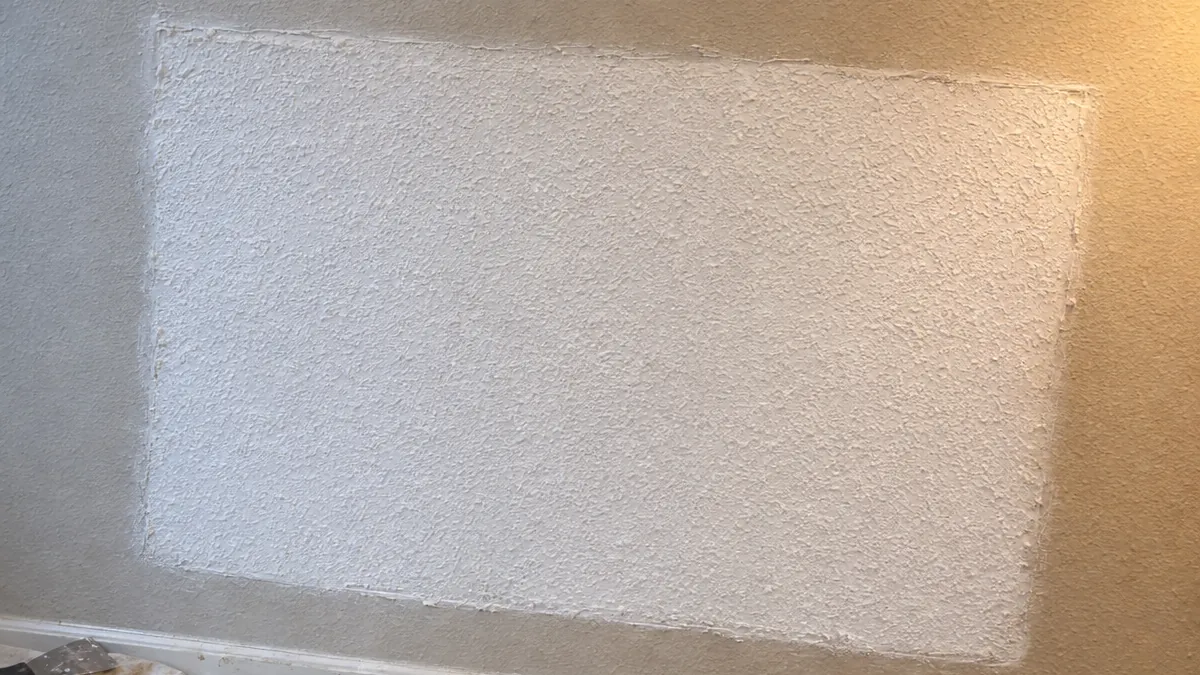
For the repairs themselves, the page on hole patching covers sizes and blocking, and texture blending on patches explains how a repaired area is made to match.